


Mid-century modern design has a timeless appeal that continues influencing contemporary architecture and interiors. With clean lines, organic shapes, and a seamless blend of indoor and outdoor spaces, this style has made a lasting impact on how we think about home design.
Together, let’s explore the key elements that define mid-century modern architecture, its enduring popularity, and how this design style continues to inspire the architecture and design of the 21st century.
Key Features of Mid-Century Modern Architecture
Clean Lines and Geometric Shapes
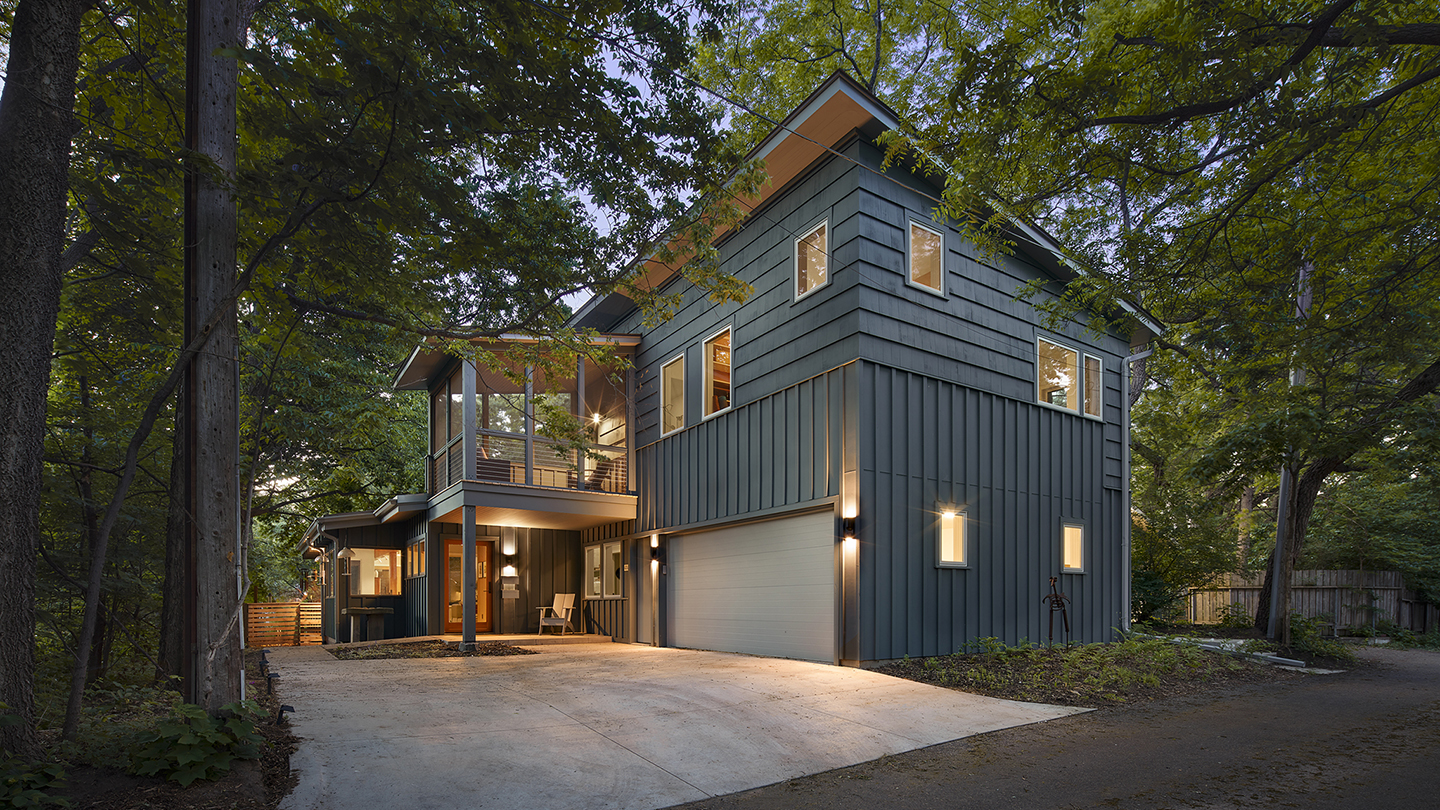
One of the most recognizable features of mid-century modern design is its clean lines and simple, geometric forms. These homes often feature low-slope or flat roofs, unadorned interiors, and an overall simplicity that facilitates a seamless flow between interior and exterior spaces. In modern interpretations, these elements continue to evoke a sense of clear function and simple beauty.
Integration with Nature
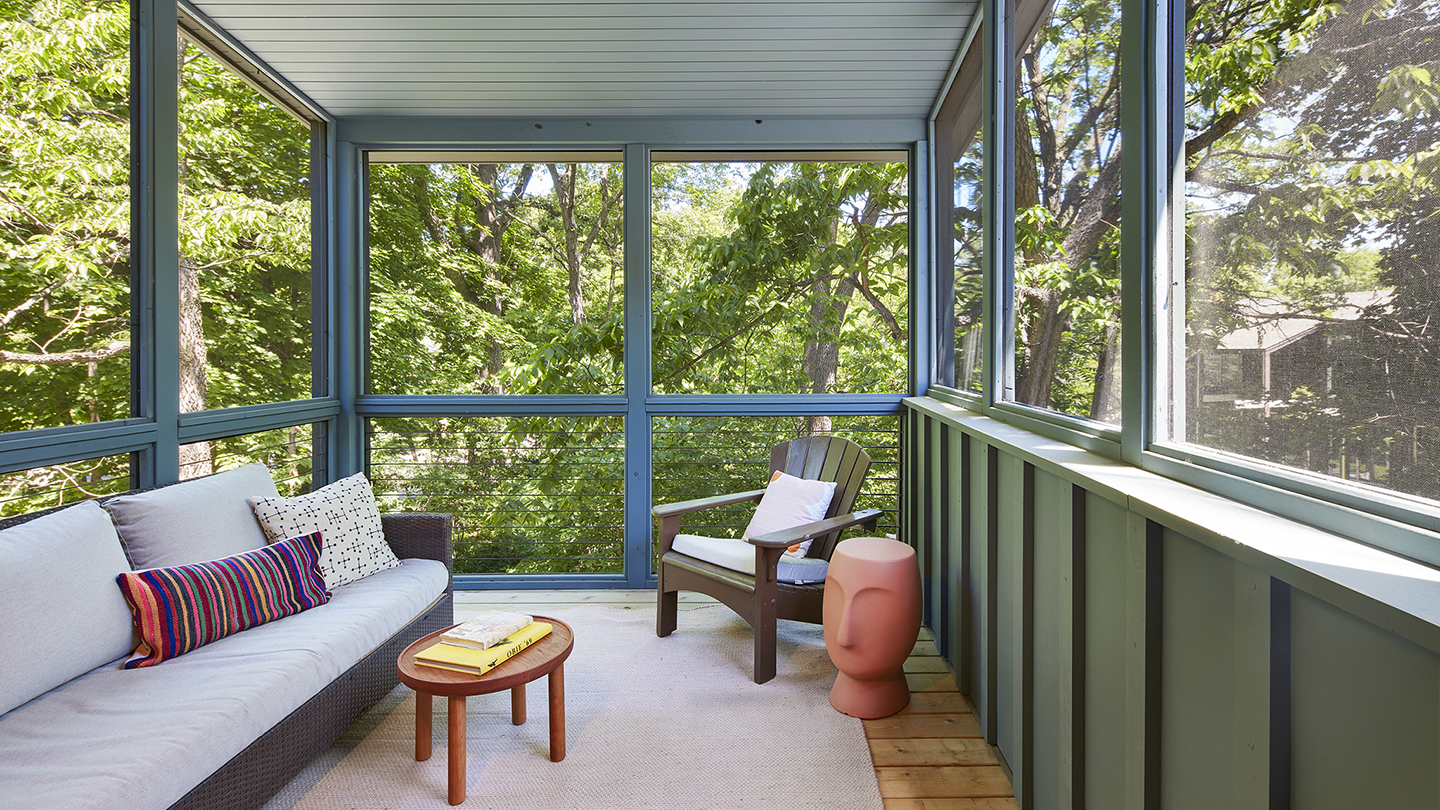
Mid-century modern homes are known for their seamless connection to the outdoor space. Large windows, glass doors, and open floor plans blur the boundaries between inside and outside, inviting natural light to flood the interiors and creating a visual link to the surrounding landscape. This connection to nature is a core feature of the design philosophy, fostering a sense of well-being and tranquility within the home.
Functional Aesthetics
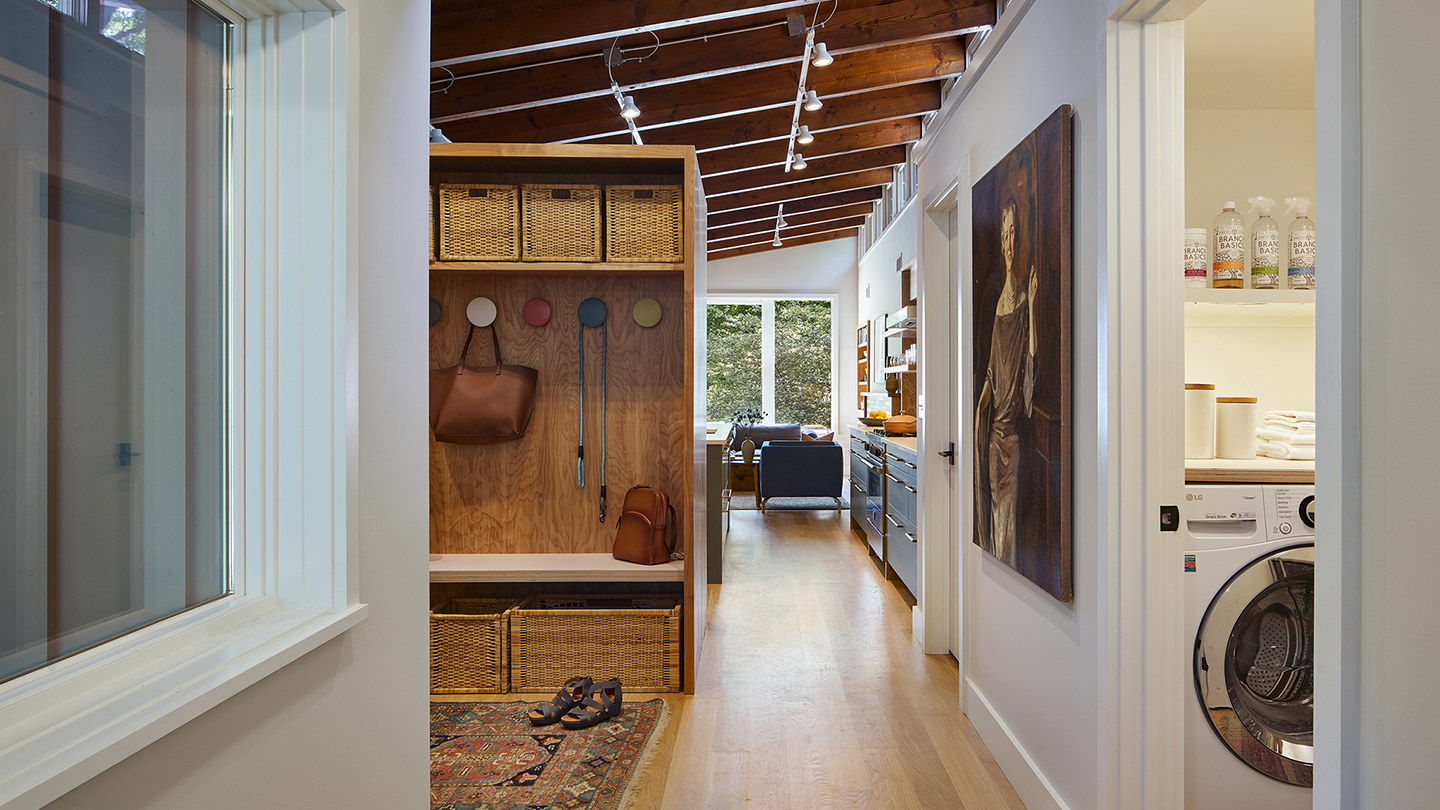
Functionality is at the heart of mid-century modern design, with every element serving a purpose. Built-in furniture, efficient planning, and multi-use spaces are hallmarks of this era, reflecting a commitment to practicality while maintaining a clean, uncluttered feel. This form-follows-function philosophy is what makes this work enduringly relevant.
Natural Materials and Bold Colors
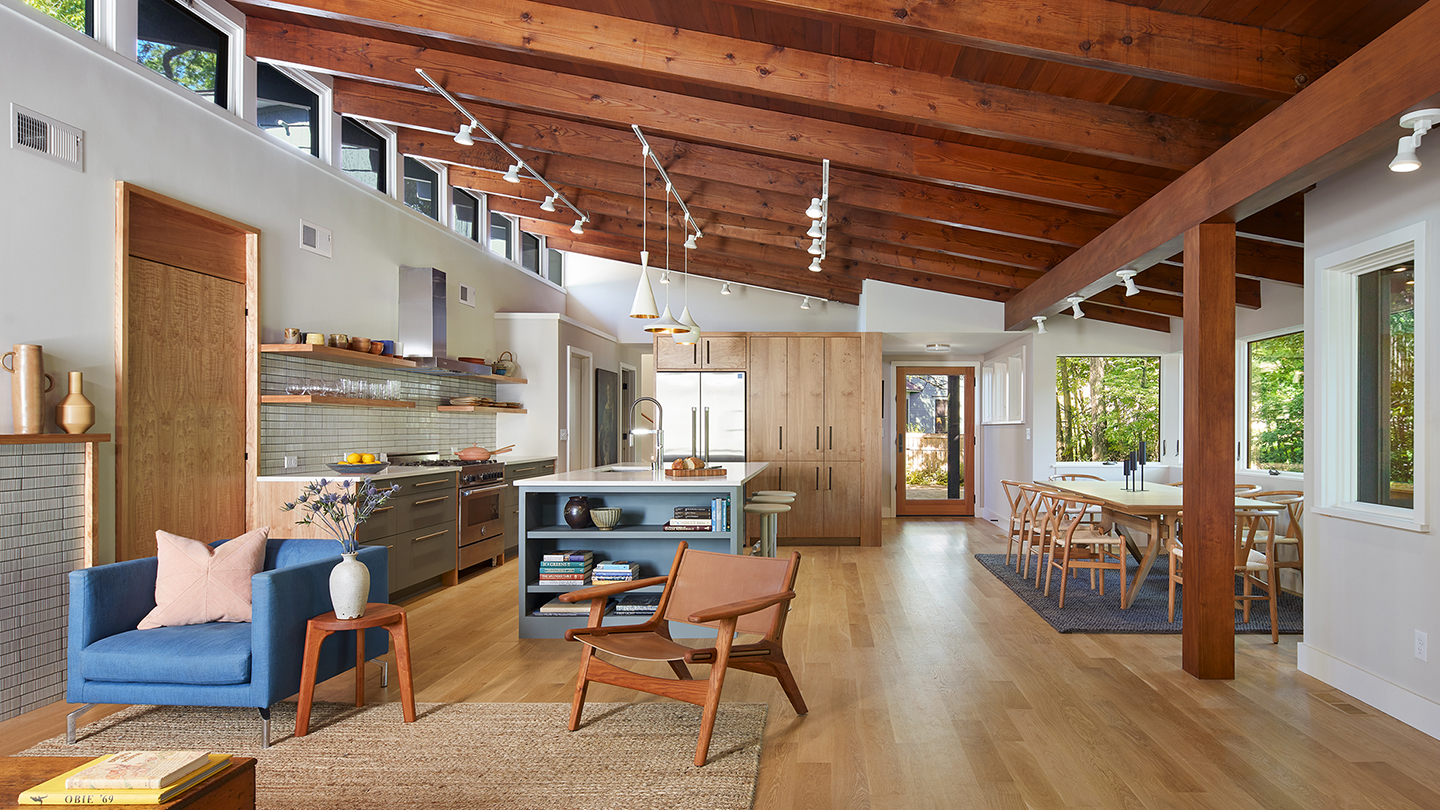
The use of natural materials like wood, stone, and leather is a key feature of mid-century modern interiors. These materials add warmth and texture, creating a contrast to the pared-down lines of the architecture. Bold colors like mustard yellow, teal, pink, and olive green are often used as accents, bringing vibrancy and character to the space.
Minimalist Decor and Statement Pieces
True to its stripped-down roots, mid-century modern design often features uncluttered spaces with a few carefully chosen well-designed furniture pieces. Iconic designs such as the Eames lounge chair or the Noguchi coffee table are not only functional but also act as sculptural elements that elevate the room’s aesthetic.
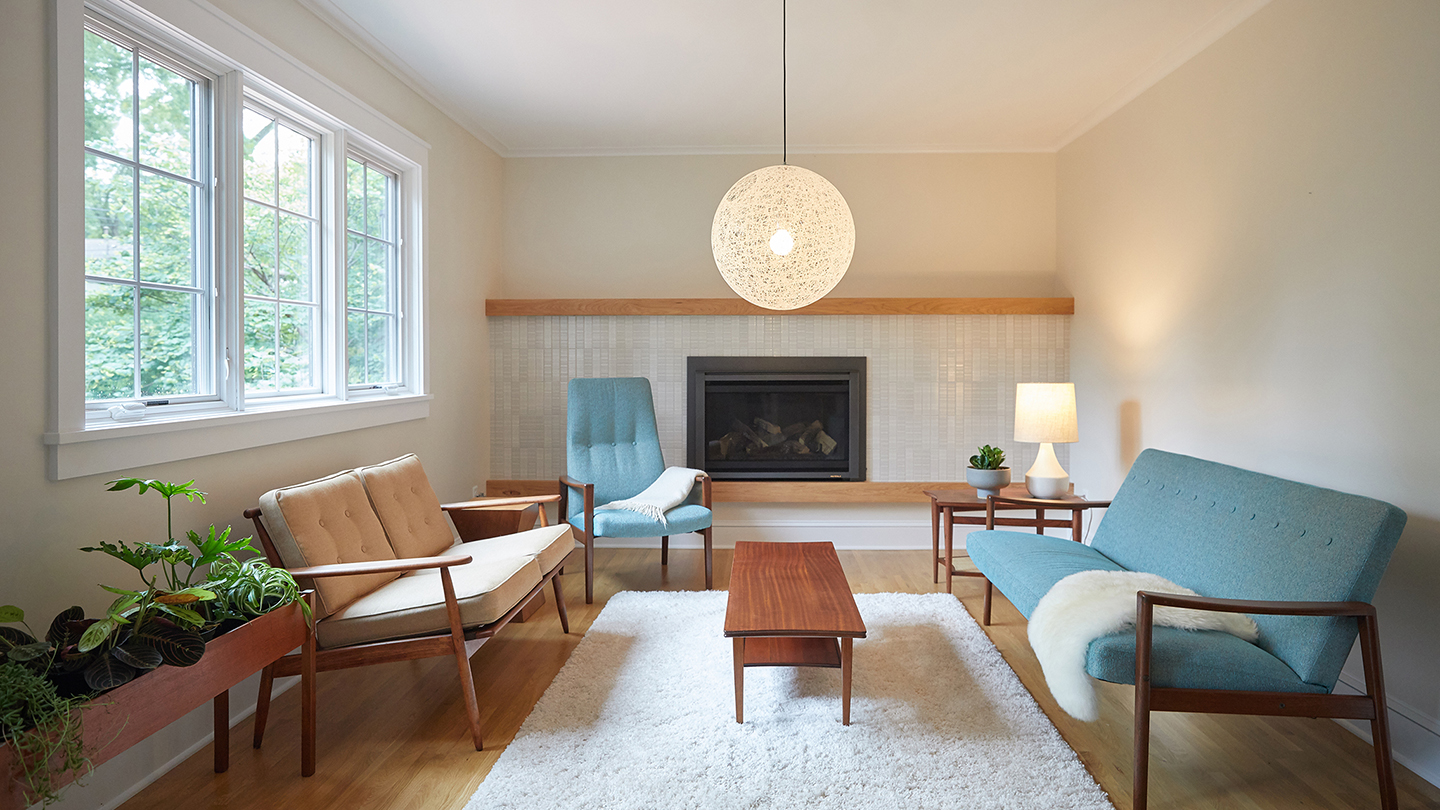
Bringing Mid-Century Modern Elements into the 21st Century
Blend Vintage with Modern
The integration of vintage mid-century pieces with contemporary furnishings can create a dynamic, layered look that feels both fresh and nostalgic. Consider pairing iconic furniture designs with modern lighting or accessories to strike the perfect balance between old and new.
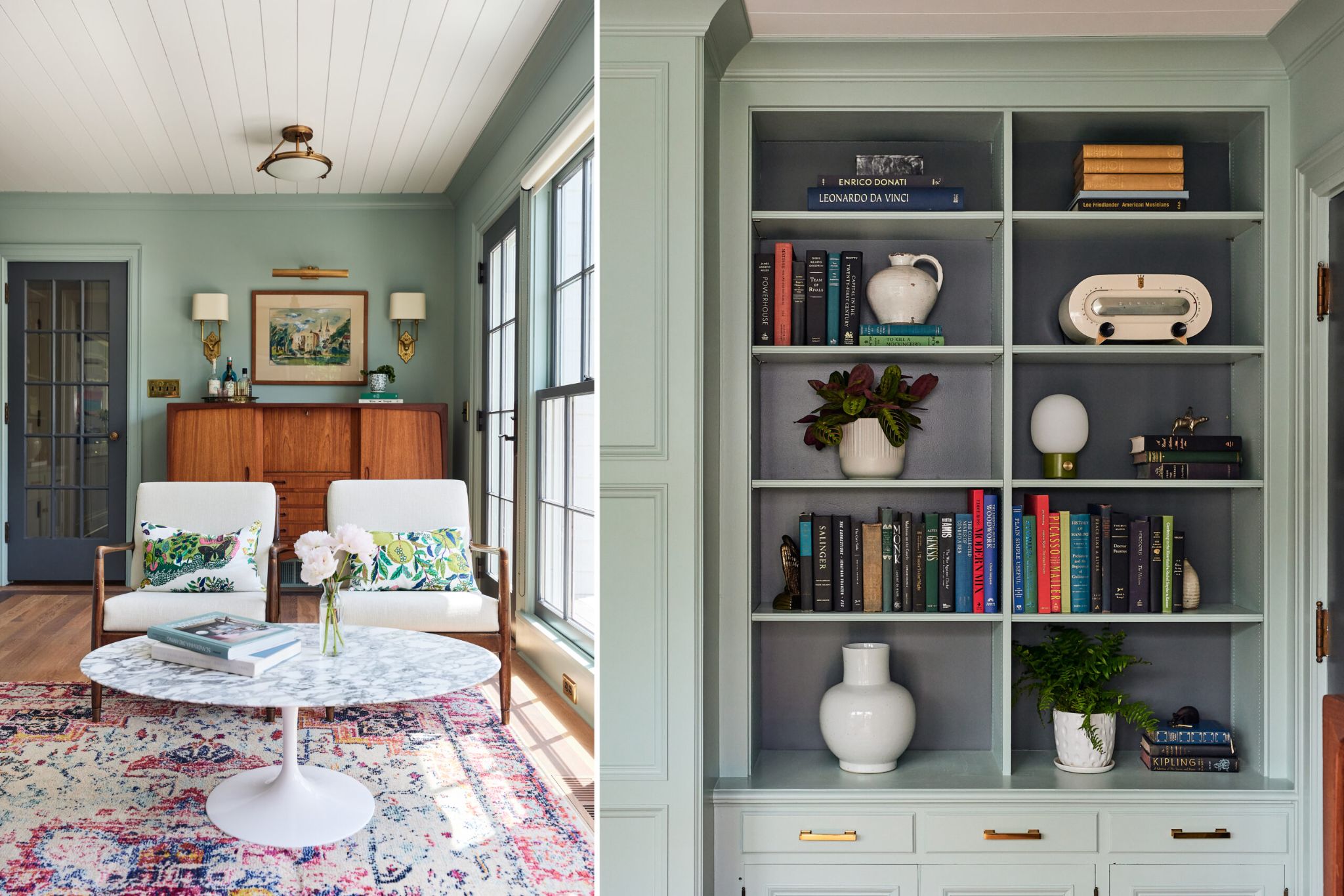
In our Edina Colonial project, an existing bookshelf was repainted to highlight the homeowner’s eclectic mix of books and accessories acquired over the years from antique stores and online auctions.
Embrace Natural Light and Open Spaces
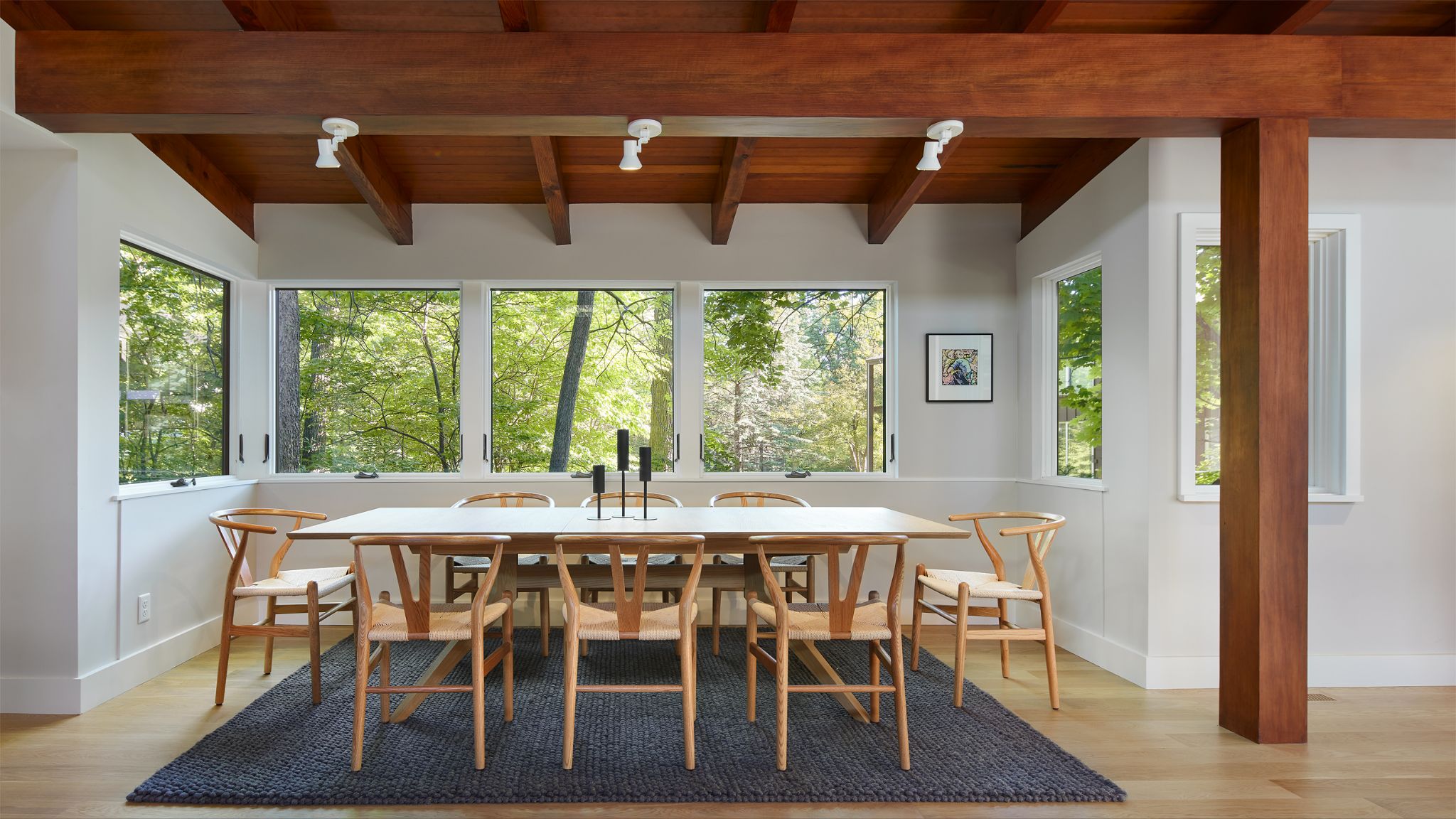
To capture the essence of mid-century modern design, focus on maximizing natural light and creating open, airy interiors. Large windows, skylights, and sliding glass doors can help bring the outdoors in, creating a living space that feels expansive.
In our St. Anthony Mid-Century Revival project, the main living spaces were expanded with larger windows to the heavily gardened front yard. The original brick fireplace was removed to give the primary living spaces unobstructed views and more access to natural light.
Use Bold Accents Wisely
While the base palette of mid-century modern design is often neutral, adding bold accent colors can bring personality into the space. Make a striking statement by incorporating hues like mustard, turquoise, or deep red through artwork, textiles, or accent walls.
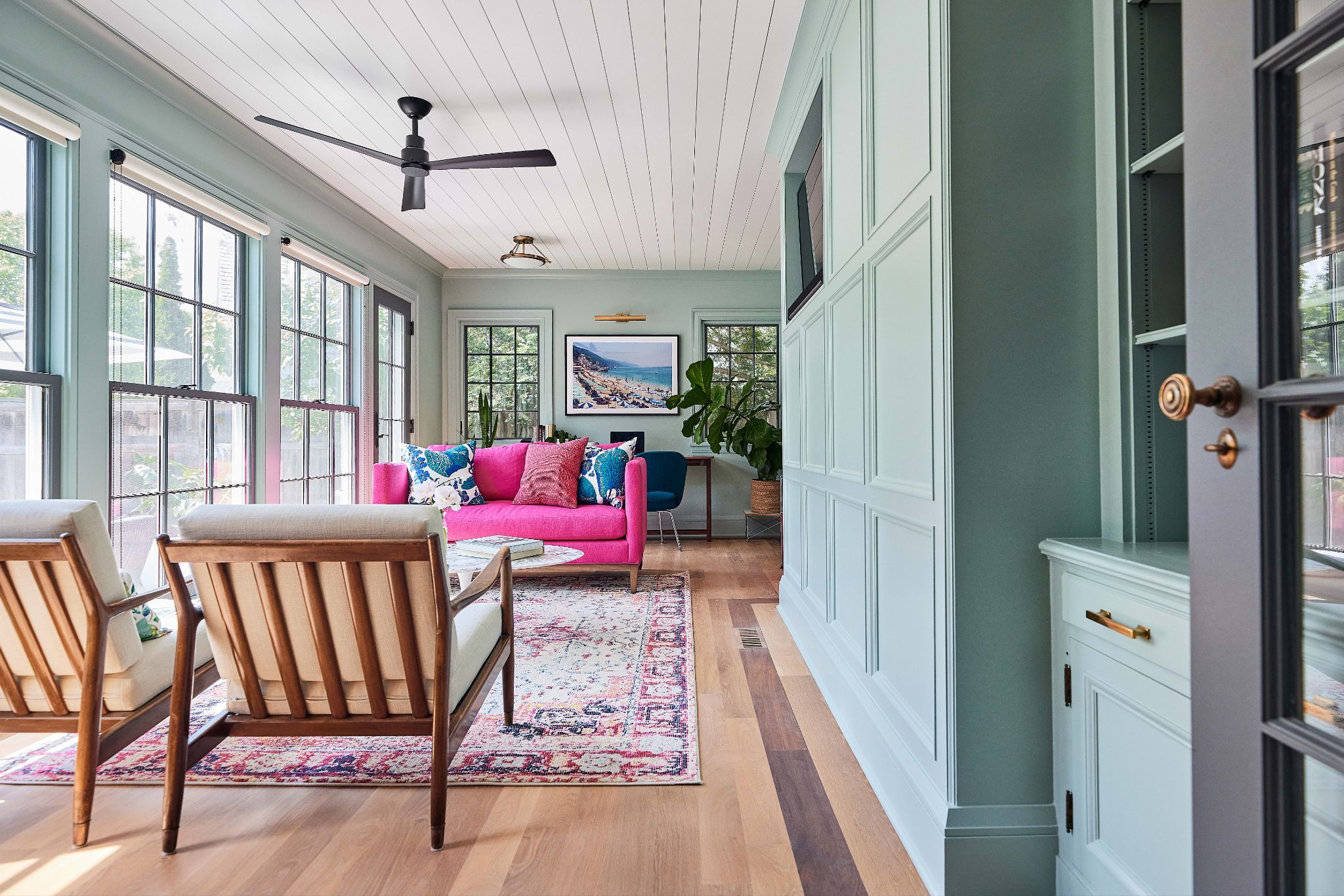
As we continue to reimagine this iconic style, mid-century modern design remains a cornerstone of architectural and interior design. It is loved for its timeless simplicity, uncluttered spaces, and focus on function and flow. Its principles have not only shaped the past but continue to influence the present, inspiring contemporary homes that prioritize both beauty and practicality.